The AI Conversation at NACS Kept Coming Back to One Thing: Your Data
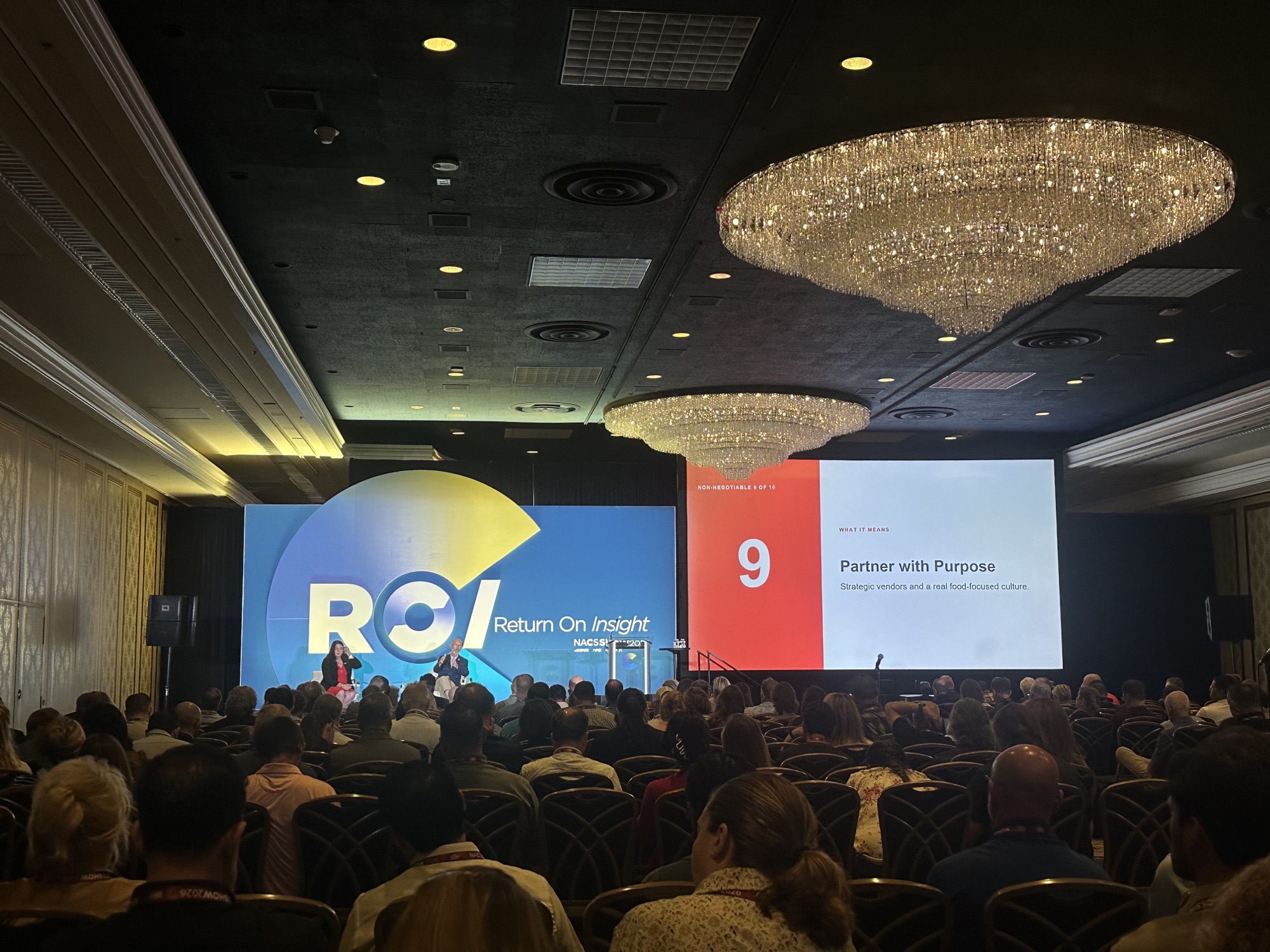
At this year's NACS Show, the AI sessions were packed. Everyone is interested in how AI can work in their business and what that will look like for them. Agents that close the books, watch fuel variance, check items against compliance rules and answer store questions in plain English all got their moment on stage at NACS.
For me, the most useful sessions were not about the technology itself, they were the ones that drove home one message: AI is only as good as the data underneath it. I have spent a lot of time studying and learning AI over the last few years and this has to be one of the most important foundations of getting quality output from your agent of choice. The quality of your output is directly correlated to the quality of your input. I was happy to see my own experience also aligned with the messaging at these sessions.
I had the opportunity to attend an AI education session at NACS with Rick Rigby, Chief Technology Officer at Atlantis Management Group, about the cost of bringing AI into your business. Cost was the topic, but the point that came up again and again was that the quality of your data decides whether your AI succeeds.
Prepare Your Data Before You Buy the Tool
One of the most telling slides in Rick’s session was not about AI at all. It was a pricing slide that broke the cost of an AI project into seven buckets: acquire, implement, prepare data, operate, adopt, govern and exit.
The third one, preparing your data, covers cleansing, mapping, labeling, historical backfill, quality checks and the ongoing pipeline work to keep all of it current. For many retailers it is the bucket that gets underestimated and overlooked the most because they are only considering the cost of the software license.
A second slide made the same point as a list of questions every retailer should be able to answer before launching an AI project:
- Who maps your data?
- Who builds the connectors?
- Who tests the output?
- Who monitors data quality?
- Who responds when the recommendation looks wrong on a holiday weekend?
If you move forward with an AI solution before fully answering these questions, your AI project will rarely grow beyond the demo. It may look great in one store, but it will not scale across fifty.
Good Governance Starts With Good Definitions
Data quality does not only affect the output. It is also a matter of best practices and governance. In his session, Rick stressed the importance of agreeing on gold sources, shared terms and master data management.
This might all sound like a housekeeping item, until you ask your AI agent a simple question. "How did we do on tobacco last week?" Your answer will depend on which system is the source of truth, how a category is defined, and whether every store reports the same way. If the underlying data doesn’t match or needs clarification, an agent will just pick an answer and sound confident about it and you will never see the hidden errors behind it.
The good news is, if you take the time to clean and verify your connected data, your AI tools now become very powerful. Rick shared what happened when his category managers were handed a dashboard built on shared, trusted data, and they started coming back week after week with sharper insight into their own categories. He called it creating force multipliers: one person with all the information becomes a whole group of people who each understand their category. That is what data empowerment looks like in practice, and it only works when people can trust the data.
You’re Ready to Buy AI, but Are You Ready to Feed It?
Rick shared a practical example from his own team that demonstrates the importance of clean, consistent data. Atlantis’s accounts payable group spends a lot of time working through invoices, so they looked at how AI could help make that task lighter. In the past, software could scan an invoice and pull out some information, but now an AI agent can read almost any document, find the details it needs and prepare them. A person is no longer keying the data in by hand. It might not be glamorous work, but it frees people up from the tedious part of their jobs, saves money and keeps vendors paid on time. Reading an invoice is only the first step, but for the result to be right, the agent has to match what it reads to the correct vendor, location and account, and that only works when your data is clean and consistent.
Rick was very direct in his session: before you build an agent, you need a clean process, because automating a messy one only multiplies the mess. An agent cannot correct inconsistent inputs. It will simply deliver inconsistent answers at greater speed.
The use cases are real, and many of them are in the back office, where the time savings are easiest to find. An agent can match vendor invoices to deliveries and flag only the ones that don't line up, it can watch fuel variance so a problem gets caught in days instead of at month end. It can check items against compliance rules every morning, or answer a category manager's question in plain English. But these workflows only work if the information going in is clean, connected and verified. The last thing you want is an AI agent that guesses, or that compares numbers that were never measured the same way.
The Payoff of Trustworthy Data
When you put the right foundations in place so you can trust your data, the payoff can be huge. Rick showed us what that can look like with what he called the “hockey stick”: the moment a chart bends sharply upward because a change you made worked. His example was an AI-powered self-checkout. In some of Atlantis’s New York stores, cash makes up a very large share of sales, so a checkout built for card payers was not enough. Once they adapted it to accept cash and moved it to the right spot in the store, usage took off.
The important piece here is how they knew. They measured before and after, and they had reliable data to show what changed. A hockey stick is only visible if your baseline is trustworthy. If Atlantis hadn’t trusted its before numbers, it couldn’t have known the new checkout was what made sales climb.
So Where Do You Start?
Now that you know the importance of clean, organized data for your new AI venture, how do you get started? Two of Rick’s closing points stood out to me, and they make a good checklist for any retailer thinking about AI:
- Prioritize data integrity and data accessibility.
- Pay attention to pricing. Know the real cost, including the data work, before you commit.
I would add a third point to this checklist: measure what changes. Start with one use case, track it against numbers you trust, and expand only what works.
Notice that the first item is not a tool. It is the foundation.
Building The Foundation Is What Taiga Does Best
Everything above describes a problem Taiga has spent time solving. Taiga brings data from the systems a convenience retailer actually runs on, including point of sale, fuel and tank monitoring, back office and loyalty, and standardizes it into one consistent shape no matter which vendor produced it. A sale looks like a sale whether it came from one register or another. Data is held safely when a store loses its connection and fills in once it is back, so a bad day for a network does not become a hole in your history. We reconcile what we receive against what lands in the analytics layer, so a discrepancy gets caught by us before it shows up in front of your team. When a store or payment type is not mapped correctly, we find it.
That work is not flashy, and it may not show up in a keynote demo, but it is the "prepare data" bucket from that pricing slide, and the answer to those questions about who maps, who monitors and who responds. At Taiga, that is exactly what we do.
When your data is clean, connected and trusted, AI becomes much easier to adopt, and that is exactly what the new Taiga AI Connector is built on. Your team can ask questions about sales in plain English from the AI assistant they already use, and the answers come straight from Taiga’s verified data, filtered to each person’s role. If you are planning your AI roadmap, start with the data. We would be glad to help you get it right.
Contact us to talk about getting your data ready for AI.